HGH or Human Growth Hormone, is an overused and overhyped word, but for simplicity’s sake, let’s use this throughout this blog because it’s the only term most people know. This is in my opinion, one of the major pieces of the anti aging puzzle. Getting this part right, is a major step to feeling and looking younger, because from what we know so far, HGH plays an important role in keeping the body’s health.
We’ll take a detailed look at HGH now.
HGH is a hormone that our pituitary gland produces in short bursts, usually in deep sleep, and also following heavy exercise. It’s responsible for empowering the cells in the body to live longer, and be more efficient. Actually, all hormones are powerful substances, which directly and indirectly control the functions of our body, and even carry some influence over our emotions, and thoughts.
HGH though, is one of the most powerful hormones known in medical science, because it controls many other hormones below it. How much the other hormones are released, how often, and when exactly they are released; these are controlled by the release of HGH. It is often called an umbrella or master hormone for this reason.
Hormones are released by the endocrine glands, of which the major endocrine glands are the pituitary, thyroid, thymus, adrenals, pancreas, ovaries, and testes. Being small in size (the size of a kidney bean) and composed of three lobes, the pituitary is a powerhouse gland producing 10 different hormones from the anterior lobe, HGH being one of them.
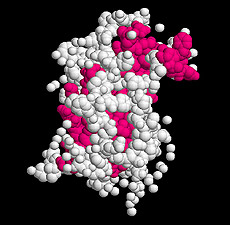 The way it all works is really complicated, but just to keep it simple; the pituitary is not independent from other organs/body parts and doesn’t function that way. The pituitary is connected to the hypothalamus (the central control of the brain) by numerous capillaries and how it works is basically a reaction to how the hypothalamus reacts to various outside stimuli in addition to our own feelings/thoughts…Speaking of the hypothalamus, it controls among other things, thyroid gland functioning, the mammary glands, the sleep cycle, appetite, HGH secretion, body heat control…etc.
The hypothalamus secretes releasing factors which stimulates the pituitary to produce its own unique hormones that will in turn stimulate the production of hormones from the adrenals, thyroid and the gonads (reproductive organs). When these hormones reach a certain level in the blood stream, a signal is then sent to the hypothalamus to slow down the production of its own released hormones. This will then stimulate the pituitary to slow down its HGH output, which in turn causes the thyroid, adrenals and gonads to slow down their own production of hormones, as well. Seems complicated no doubt, but it’s all really an automated process in healthy people.
HGH is produced by pituitary cells called somatotrophes, and therefore HGH is often called somatotrophin or somatropin. When HGH is released (in short bursts) it is taken up by the liver, which then converts the growth hormone into a growth factor. This growth factor is called IGF-1.
IGF-1 is the acronym for Insulinlike Growth Factor 1. Scientists may refer to it as somatomedin C. Now HGH cannot be used by the body in raw form; it must be converted into a usable form which is IGF-1. This relationship between HGH and IGF-1 is used as a measurement of HGH levels in the body. If HGH levels increase, so will the IGF-1 levels. Likewise, low HGH levels also mean low IGF-1 levels. Although not a very accurate yardstick because certain people may have “not-so-efficient” livers, it is generally used as a lab test result to gauge the levels of HGH in the body.