The pituitary gland produces HGH in adequate amounts during youth, but with the advancement of age, something happens to the feedback loop between the somatotrophes (HGH producing cells in the pituitary), the hypothalamus, and the release of IGF-1 by the liver. The workings of this feedback loop have long fascinated scientists, because of the fine precision and tuning which it possesses on its own.
Part of the mystery is the fact that the somatotrophes do not seem to be affected by age, at least according to research so far. These cells are able to produce growth hormone in adequate amounts even in old age, as long as they are stimulated enough. That is the reason why HGH releasers apparently work, but the question remains – what actually triggers off aging in the first place?
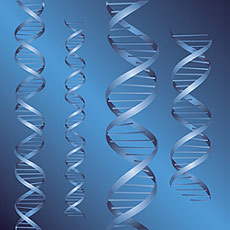 Although cellular aging is to a certain extent hard-coded into our cells’ DNA, the ability of the cells to maintain their DNA stability and lifespan is high. Our cells, by nature, are programmed to live as long as they can. So the factors causing aging have to be external by nature.
Two theories related to this are the rise and fall of GHIH and GHRH:
- The increase of somatostatin or GHIH
- The decline of Growth Hormone Releasing Hormone (GHRH) in sensitivity towards growth hormone inducing stimuli.
Somatostatin, or better known as Growth Hormone Inhibiting Hormone (GHIH) is aptly named because what it does best is impede the release of HGH, by blocking Growth Hormone Releasing Hormone (GHRH) from its tasks. With advancing age, GHRH may be desensitized further by the actions of GHIH, becoming less responsive to the feedback signals of the HGH-IGF-1 loop.
The good news is that this decline of growth hormone can be helped, in spite of what we have been conditioned to think. By replacing the lost growth hormone via HGH replacement therapy, or taking HGH releasers, these negative effects can be combated to a large degree. Aging therefore, is not something irreversible.
Lab mice that have been given growth hormone, and whose diets have been restricted, have been able to have their growth hormone levels restored. By the same token, it can be assumed that humans can restore their growth hormone levels – if they do the same thing.